Find free, ready-to-teach resources aligned to INFO-H5. Designed with teachers and artists, in partnership with STEM researchers.
Standard statement
INFO-H5 | Science & Engineering Practices
Communicate scientific and/or technical information or ideas (e.g. about phenomena and/or the process of development and the design and performance of a proposed process or system) in multiple formats (including orally, graphically, textually, and mathematically).
Standards-Aligned Resources
Created with purpose: see how resources connect to this standard.
ShowGradeAllAlignmentAll
Showing 4 of 4 units
Unit
Bioinspired Design: Looking to Biology for Better Solutions
Grades
9, 10, 11, 12
Students will identify a problem with an existing product and investigate biological functions to inspire a product redesign. Through independent research using AI bots and scholarly sources, students will gain a new perspective on STEM, biology, and the human interface between.
Alignment summary( Target)
Lesson 5
The capstone project at the end of this unit will be a presentation that you determine and which reflects students' independent investigations and conclusions about the problem they identified and their biologically inspired solution.
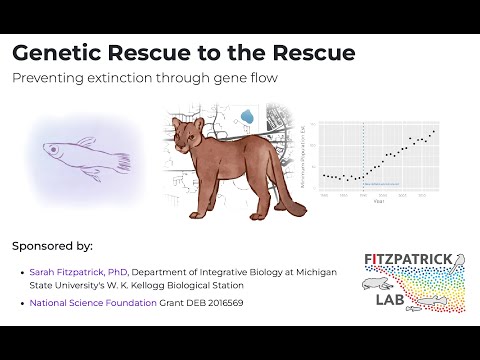
Genetic Rescue to the Rescue: Preventing extinction through gene flow
Grades
9, 10, 11, 12
Students will deepen their understanding of basic genetics concepts as they dive into real data sets from ongoing research. They will hone critical thinking and communication skills and come away with clear examples of how science can lead to positive impacts on wildlife populations.
Alignment summary( Target)
Lessons: 4, 5
- Students will complete a worksheet that asks them to identify a graph that depicts a population undergoing an extinction vortex and explain their choice by comparing it to another graph. - Students also complete concept maps to communicate their understanding of extinction vortex and genetic rescue.
I Like That!: How perception, emotion, and cognition shape our preferences
Grades
9, 10, 11, 12
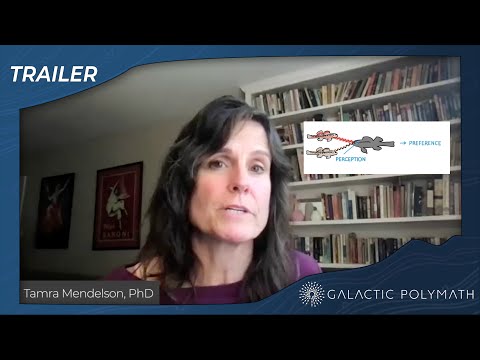
Students will conduct experiments and analyze real scientific data as they learn about themselves. They'll learn how our eyes and brains interact to determine what we like and dislike, and apply this knowledge to fish research and the art of character design.
Alignment summary( Target)
Lesson 1
In Part 1, students will conduct an experiment to understand their own visual preferences and generate graphs of the classroom data. They will then interpret these findings to test a hypothesis. In Part 2, students similarly analyze a real scientific figure. In Part 3, they again collect data, this time based on anatomical ratios in character design sheets. In all cases, there are opportunities for students to share their ideas, observations and reflections.
Animal Collective: How group behavior can produce surprising problems—and solutions!
Grades
9, 10, 11, 12
Students will draw their own social networks, ponder the meaning of complexity and begin to notice unexpected patterns that emerge around them, unnoticed. Through hands-on activities and digital experiments, students will discover how complexity research enriches our daily lives.
Alignment summary( Connected)
Lesson 1
Students will draw their own social network to convey the concept of complexity in a personalized way.